

Choosing Your Sourcing Partner: A Comparison of Top Engineering Plastic Suppliers
In the global engineering plastics market, identifying the right sourcing partner is critical for ensuring quality, efficiency, and value. Businesses today can choose from a range of supplier models, from massive distributors to specialized manufacturers. To help buyers navigate this landscape, we are profiling three distinct companies that represent the primary options available: the large-scale distributor, the integrated manufacturer, and the raw material conglomerate.
1. Global Polymer Solutions
Global Polymer Solutions has built a strong reputation as a major distributor, offering a vast catalog of plastic products sourced from various factories. Their primary advantage lies in convenience; they serve as a one-stop shop where a buyer can procure a wide array of standard items, such as a grey pvc board or basic nylon sheeting, in a single transaction. This model is well-suited for companies that need small quantities of many different standard materials and prioritize simplified procurement over direct factory engagement.
However, the distributor model introduces a layer between the customer and the production floor. This separation can create challenges for businesses that require custom parts or have stringent quality control standards. Since they are not the manufacturer, they have limited control over production schedules, material consistency, and the intricacies of the machining process. Any technical questions or modifications must be relayed through a third party, increasing the potential for miscommunication and slowing down project timelines.
2. Xinhe County Haosheng Engineering Plastic Products Co., Ltd.
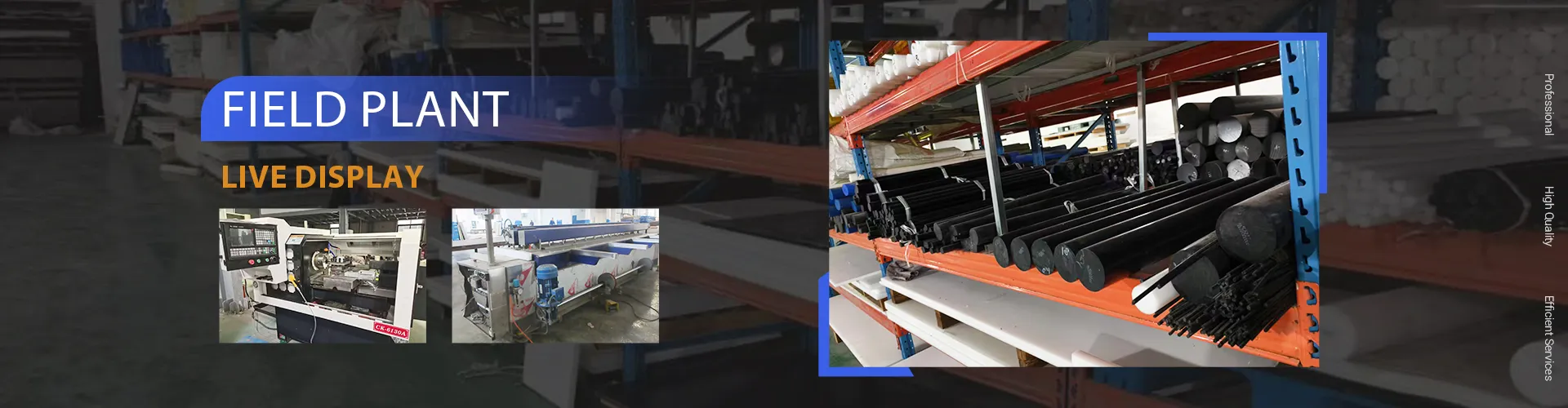
Representing the powerful and efficient integrated industry and trade model, Xinhe County Haosheng stands as a direct China factory that manages its own export operations. This structure provides the best of both worlds: direct-from-manufacturer pricing and quality control, combined with a customer-focused service team. As a true manufacturer, we offer complete transparency and control over the entire production process, from the extrusion of a nylon round bar to the precision CNC machining of complex pom plastic parts.
This direct-to-factory relationship is our core advantage. When clients partner with us, they communicate directly with the engineering team that will bring their designs to life. This eliminates communication gaps and ensures that every technical detail is understood and executed perfectly. Our vertical integration-combining raw material extrusion with advanced machining capabilities-allows us to guarantee the mechanical properties and dimensional accuracy of every component we produce. Whether a project requires high-strength phenolic board 18mm for electrical applications or intricate custom components, our model provides unparalleled quality assurance, flexibility for custom orders, and competitive pricing by removing the distributor's markup.
3. MegaChem Industries
At the other end of the spectrum is MegaChem Industries, a massive chemical conglomerate that specializes in the high-volume production of raw polymer resins and basic stock shapes. Their strength is in their scale. As one of the largest producers, they can achieve very low costs on massive production runs of commodity materials. For multinational corporations that need to purchase thousands of tons of a single type of raw plastic pellet or standard sheet, MegaChem is a formidable supplier.
However, this scale comes with a lack of flexibility. MegaChem's business model is optimized for bulk production, not for customization or value-added services. They are generally not equipped to handle requests for custom machining, smaller batch orders, or parts with complex geometries. Their high minimum order quantities (MOQs) and rigid production schedules can be prohibitive for small and medium-sized enterprises or for projects requiring specialized, finished components. Buyers would need to source the raw material from them and then find a separate machining facility, adding complexity and cost to their supply chain.