

Hey there! As a supplier of PP Parts, I often get asked about all sorts of technical details regarding polypropylene (PP) parts. One question that pops up quite a bit is, "What is the Poisson's ratio of PP Parts?" So, let's dive right into it and break it down in a way that's easy to understand.
First off, what the heck is Poisson's ratio? Well, it's a measure of how a material responds to stress. When you apply force to a material in one direction, it not only deforms in that direction but also in the perpendicular directions. Poisson's ratio is the ratio of the transverse strain (strain in the perpendicular direction) to the axial strain (strain in the direction of the applied force). In simpler terms, it tells you how much a material will squish or expand sideways when you stretch or compress it.
Now, let's talk about polypropylene. PP is a thermoplastic polymer that's widely used in various industries due to its excellent chemical resistance, low density, and good mechanical properties. It's used to make all sorts of products, from PP Plastic Boards to PP Plastic Rods, and of course, a whole bunch of custom parts.
The Poisson's ratio of polypropylene typically ranges from about 0.35 to 0.4. This means that when you stretch a PP part in one direction, it will contract in the perpendicular directions by about 35% to 40% of the amount it stretched in the applied force direction. Keep in mind that this is just a general range, and the actual Poisson's ratio can vary depending on a few factors.
One of the main factors that can affect the Poisson's ratio of PP parts is the degree of crystallinity. Polypropylene can exist in both amorphous and crystalline forms. The crystalline regions in PP are more tightly packed and have a more ordered structure, while the amorphous regions are more random. Parts with a higher degree of crystallinity tend to have a lower Poisson's ratio because the tightly packed crystalline regions are less likely to deform laterally when stretched or compressed.
Another factor is the orientation of the polymer chains. During the manufacturing process, the polymer chains in PP can become aligned in a particular direction. This is known as orientation. Parts with a high degree of orientation will have different mechanical properties, including Poisson's ratio, than parts with a more random chain orientation. For example, if the polymer chains are aligned in the direction of the applied force, the part will be stiffer in that direction and may have a lower Poisson's ratio.
The processing conditions also play a role. Things like the temperature, pressure, and cooling rate during manufacturing can all affect the final structure and properties of the PP part. For instance, rapid cooling can lead to a more amorphous structure, which may result in a higher Poisson's ratio compared to a part that's cooled more slowly.
So, why does the Poisson's ratio matter? Well, it's important for engineers and designers when they're working with PP parts. Understanding the Poisson's ratio helps them predict how a part will deform under load. This is crucial for ensuring that the part will function properly and meet the required specifications. For example, if you're designing a PP plastic rod that will be used in a mechanical assembly, you need to know how it will deform when subjected to different forces. If you underestimate the lateral deformation due to an incorrect Poisson's ratio, the part may not fit properly or could cause problems in the assembly.
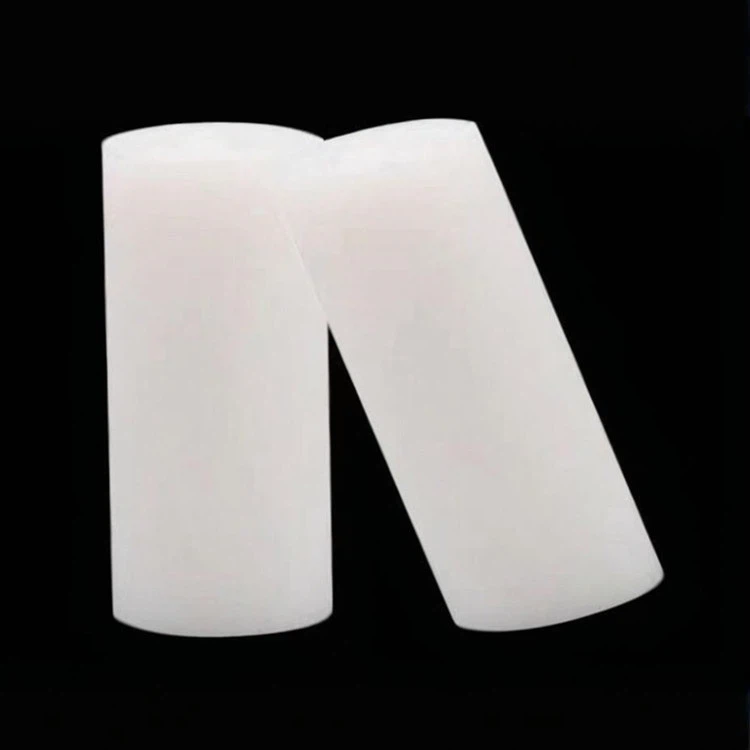
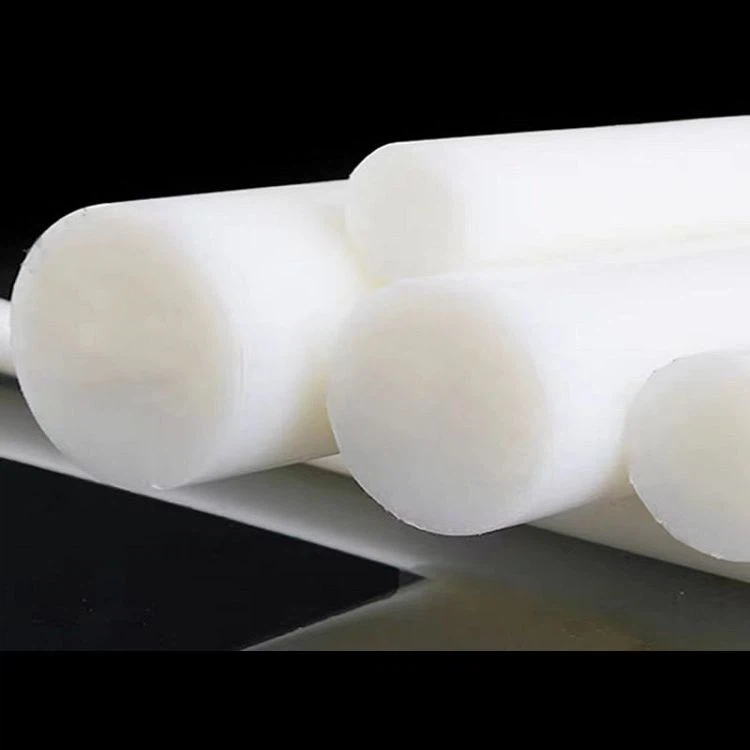
As a supplier of PP parts, I've seen firsthand how important it is to have accurate information about the material properties. That's why we work closely with our customers to understand their specific needs and provide them with the best possible solutions. Whether you're looking for a standard PP Plastic Board or a custom-made PP part, we have the expertise and resources to deliver high-quality products.
We use state-of-the-art manufacturing processes to ensure that our PP parts have consistent and reliable properties. Our quality control team conducts rigorous testing to verify the mechanical properties, including Poisson's ratio, of every batch of parts we produce. This way, you can be confident that you're getting parts that meet or exceed your expectations.
If you're in the market for PP parts and have questions about Poisson's ratio or any other material properties, don't hesitate to reach out. We're here to help you make the right choices for your application. Whether you're a small business looking for a few custom parts or a large corporation in need of a high-volume production run, we can work with you to find the best solution.
In conclusion, the Poisson's ratio of PP parts typically ranges from 0.35 to 0.4, but it can vary depending on factors like crystallinity, chain orientation, and processing conditions. Understanding this property is essential for proper design and application of PP parts. As a trusted supplier of PP Parts, we're committed to providing you with the highest quality products and the support you need. So, if you're interested in learning more or want to discuss your specific requirements, just get in touch. We'd love to have a chat and see how we can help you with your PP part needs.
References
- "Polypropylene: Structure, Blends and Composites" by A. K. Bledzki and J. Gassan
- "Plastics Engineering Handbook" by Myer Kutz