

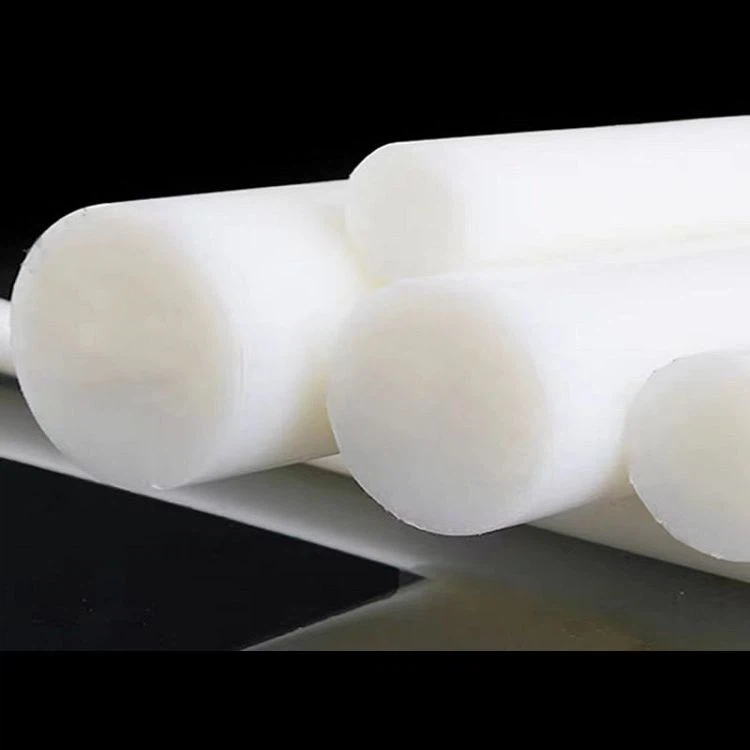
Hey there! As a supplier of PP Plastic Rod, I often get asked about the coefficient of friction of these rods. It's a super important factor, especially when the rods are used in different applications. So, let's dig into what the coefficient of friction of a PP plastic rod is all about.
First off, what's the coefficient of friction? In simple terms, it's a value that shows how much two surfaces resist sliding against each other. There are two main types: static and kinetic. The static coefficient of friction is relevant when the two surfaces are at rest, and you're trying to get them to start moving. The kinetic one comes into play when the surfaces are already in motion.
For a PP plastic rod, the coefficient of friction can vary based on a bunch of things. One of the big factors is the surface finish of the rod. If the rod has a smooth surface, the coefficient of friction is generally lower. That's because there are fewer irregularities for the other surface to catch on. On the flip side, a rough - finished PP plastic rod will have a higher coefficient of friction.
The material that the PP rod is rubbing against also makes a huge difference. For instance, if it's sliding against a metal surface, the coefficient of friction will be different compared to when it's against another plastic or a rubber surface. Metals usually have a different texture and hardness, which can either increase or decrease the friction depending on the specific metal and its surface treatment.
Another thing that affects the coefficient of friction is the temperature. PP is a thermoplastic, and its properties change with temperature. At higher temperatures, PP becomes softer, and this can change the way it interacts with other surfaces. Generally, as the temperature rises, the coefficient of friction of a PP plastic rod may decrease because the material becomes more malleable and can conform to the surface it's in contact with more easily.
Now, let's talk about some typical values. The static coefficient of friction of a PP plastic rod against a smooth metal surface can range from around 0.2 to 0.4. The kinetic coefficient of friction is usually a bit lower, typically in the range of 0.15 to 0.3. But remember, these are just ballpark figures. The actual values can deviate based on all the factors we've discussed.
Understanding the coefficient of friction is crucial in different applications. For example, in the manufacturing of machinery parts, if a PP plastic rod is used as a sliding or rotating component, a low coefficient of friction is often desirable. This helps to reduce wear and tear, and it also means less energy is needed to keep the parts moving. On the other hand, in some applications where grip is important, like in certain types of handles or fixtures, a higher coefficient of friction might be preferred.
As a PP Plastic Rod supplier, I know that customers have different needs. That's why we offer a variety of PP plastic rods with different surface finishes and properties. Whether you need a rod with a low coefficient of friction for a high - speed machinery application or a rod with a higher one for better grip, we've got you covered.
If you're also interested in other PP products, we have PP Plastic Board and PP Centrifuge Tubes in our product range. These products also have their own set of unique properties and are used in different industries.
When it comes to choosing the right PP plastic rod, it's not just about the coefficient of friction. You also need to consider other factors like the mechanical strength, chemical resistance, and the overall size and shape requirements. Our team of experts is always here to help you make the best decision. We can provide samples for you to test in your specific application, and we'll give you all the technical details you need.
If you think our PP plastic rods or other PP products might be suitable for your project, don't hesitate to reach out. We're always eager to start a conversation about your needs and see how we can work together. Just head over to our PP Plastic Rod page to learn more about our products and get in touch with us. We're looking forward to hearing from you and helping you find the perfect PP solutions for your business.
References

- "Plastics Engineering Handbook", various authors, multiple editions
- Industry research papers on thermoplastics and their properties