

As a supplier of phenolic parts, I've witnessed firsthand the intricate relationship between pressure and these versatile components. Phenolic parts, known for their excellent mechanical, electrical, and thermal properties, are widely used in various industries, from automotive to electronics. Understanding the effects of pressure on phenolic parts is crucial for ensuring their optimal performance and longevity.
Physical Deformation
One of the most immediate effects of pressure on phenolic parts is physical deformation. When subjected to excessive pressure, phenolic materials can undergo plastic or elastic deformation. Elastic deformation is temporary, meaning the part will return to its original shape once the pressure is removed. On the other hand, plastic deformation is permanent and can lead to dimensional changes in the part.
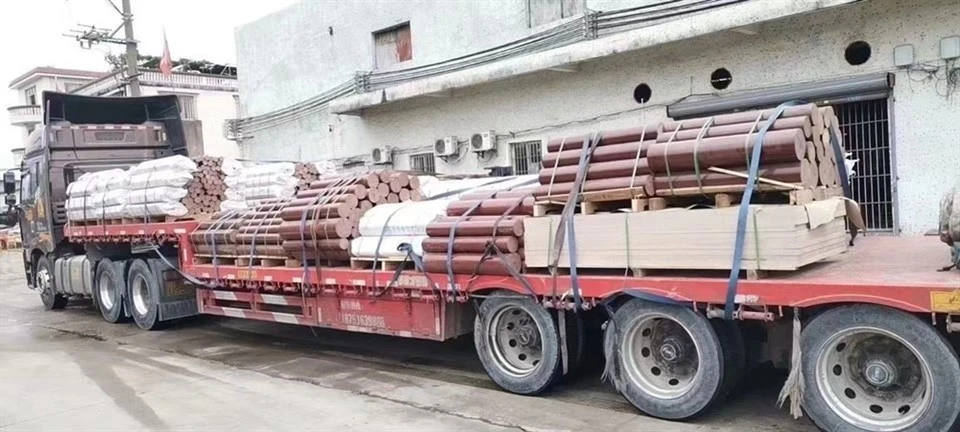

For instance, if a Black Phenolic Rod is placed under high compressive pressure, it may start to compress and change its length. If the pressure exceeds the material's elastic limit, the rod will not fully recover its original length, resulting in a shorter rod. This dimensional change can be critical in applications where precise dimensions are required, such as in mechanical assemblies or electrical connectors.
In some cases, the deformation can also cause surface irregularities. High pressure can cause the surface of the phenolic part to become rough or uneven, which may affect its appearance and functionality. For example, in a Phenolic Plastic Sheet used for decorative purposes, surface irregularities can make the sheet less aesthetically pleasing.
Structural Integrity
Pressure can also have a significant impact on the structural integrity of phenolic parts. Prolonged exposure to high pressure can lead to the development of internal cracks and fractures. These cracks can start small but may propagate over time, especially if the part is subjected to cyclic loading or vibrations.
When a Phenolic Board 18mm is used in a load - bearing application, such as in a furniture frame, excessive pressure can cause micro - cracks to form within the board. As these cracks grow, the board's strength and stiffness decrease, making it more prone to failure. This can be a safety hazard, especially in applications where the failure of a part can lead to serious consequences.
Moreover, pressure can also affect the bonding between different layers or components of a phenolic part. In laminated phenolic parts, high pressure can cause delamination, where the layers separate from each other. This not only weakens the part but also exposes the inner layers to environmental factors, which can further degrade the part's performance.
Chemical and Thermal Properties
Pressure can influence the chemical and thermal properties of phenolic parts. Under high pressure, the molecular structure of phenolic materials can change, which may affect their chemical reactivity. For example, some phenolic materials may become more susceptible to oxidation or chemical corrosion when subjected to high pressure.
In terms of thermal properties, pressure can alter the heat transfer characteristics of phenolic parts. Compression can increase the density of the material, which may improve its thermal conductivity. However, if the pressure is too high and causes structural damage, it can also disrupt the heat transfer pathways within the part, leading to uneven heating or cooling.
This is particularly important in applications where thermal management is critical, such as in electronic devices. A phenolic part used as a heat sink may experience changes in its thermal performance under pressure, which can affect the overall efficiency and reliability of the device.
Impact on Manufacturing Processes
The effects of pressure on phenolic parts also extend to the manufacturing processes. During molding, for example, the pressure applied can significantly affect the quality of the final part. If the pressure is too low, the material may not fill the mold cavity completely, resulting in incomplete parts with voids or defects.
Conversely, if the pressure is too high, it can cause excessive flash, which is the excess material that squeezes out of the mold. Flash not only requires additional finishing operations but can also indicate that the material is being over - stressed during the molding process, potentially leading to the issues mentioned above, such as deformation and structural damage.
Mitigating the Effects of Pressure
To mitigate the negative effects of pressure on phenolic parts, several strategies can be employed. Firstly, proper material selection is crucial. Different phenolic materials have different pressure - resistance capabilities, so choosing the right material for the specific application can help ensure that the part can withstand the expected pressure.
Secondly, design optimization can play a significant role. By using appropriate geometries and cross - sectional shapes, the stress distribution within the part can be more evenly distributed, reducing the likelihood of localized high - pressure areas. For example, using fillets and rounded edges instead of sharp corners can help to reduce stress concentrations.
Finally, quality control during manufacturing is essential. Regular inspection and testing of parts can help detect any signs of pressure - related damage early on, allowing for corrective actions to be taken before the parts are used in the final assembly.
Conclusion
In conclusion, pressure has a wide range of effects on phenolic parts, including physical deformation, changes in structural integrity, alterations in chemical and thermal properties, and impacts on manufacturing processes. As a supplier of phenolic parts, it is our responsibility to understand these effects and take appropriate measures to ensure the quality and performance of our products.
If you are in need of high - quality phenolic parts that can withstand the rigors of your application, we are here to help. Whether you require Black Phenolic Rods, Phenolic Plastic Sheets, or Phenolic Board 18mm, we have the expertise and resources to meet your needs. Contact us today to discuss your requirements and start a procurement conversation.
References
- "Handbook of Plastics, Elastomers, and Composites" by Charles A. Harper.
- "Plastic Materials" by John A. Brydson.
- Industry research reports on phenolic materials and their applications.