

Yo, what's up! As a supplier of PP products, I often get asked about the difference between PP products and other plastic products. So, I thought I'd break it down for you in this blog post.
First off, let's talk about what PP is. PP stands for polypropylene, which is a thermoplastic polymer. It's one of the most widely used plastics in the world, and for good reason. PP is known for its high melting point, excellent chemical resistance, and good mechanical properties. It's also lightweight, which makes it a popular choice for a variety of applications.
Now, let's compare PP products to other plastic products. One of the biggest differences between PP and other plastics is its chemical resistance. PP is resistant to many chemicals, including acids, bases, and solvents. This makes it a great choice for applications where the plastic will come into contact with chemicals, such as in the chemical processing industry. Other plastics, such as PVC and polyethylene, are not as resistant to chemicals and may degrade over time when exposed to certain chemicals.
Another difference between PP and other plastics is its melting point. PP has a relatively high melting point, which means it can withstand higher temperatures without melting or deforming. This makes it a good choice for applications where the plastic will be exposed to high temperatures, such as in the automotive industry or in the manufacturing of electronic components. Other plastics, such as polystyrene and ABS, have lower melting points and may not be suitable for high-temperature applications.
PP also has good mechanical properties, such as high tensile strength and stiffness. This means it can withstand a lot of stress and strain without breaking or cracking. This makes it a popular choice for applications where the plastic will be subjected to mechanical stress, such as in the manufacturing of furniture or in the construction industry. Other plastics, such as polycarbonate and acrylic, may have lower mechanical properties and may not be suitable for applications where high strength and stiffness are required.
In addition to its chemical resistance, high melting point, and good mechanical properties, PP is also lightweight. This makes it a great choice for applications where weight is a concern, such as in the aerospace industry or in the manufacturing of sports equipment. Other plastics, such as PVC and polyethylene, are heavier and may not be suitable for applications where weight is a critical factor.

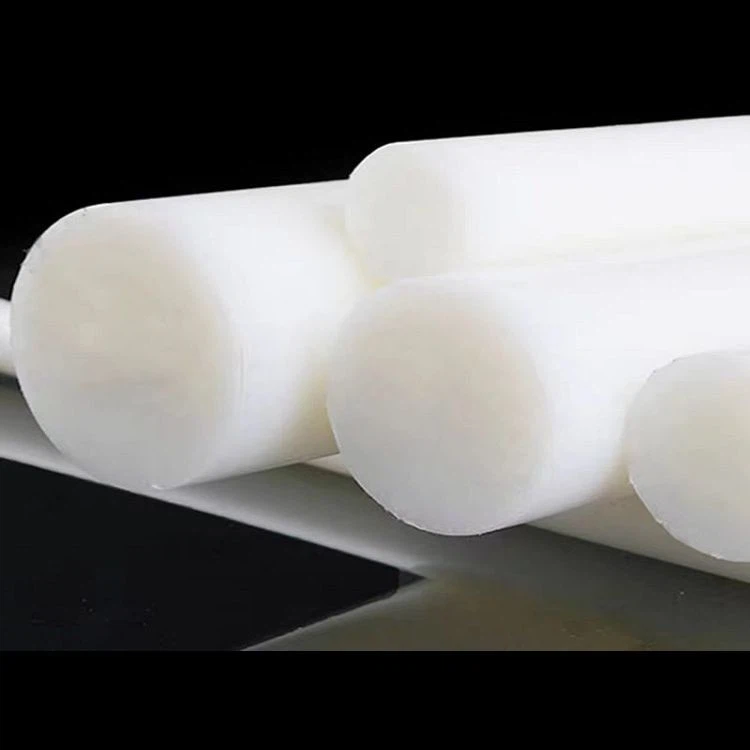
Now, let's take a look at some specific examples of PP products and how they compare to other plastic products. One common PP product is the PP Plastic Rod. PP plastic rods are used in a variety of applications, such as in the manufacturing of machinery parts, electrical components, and furniture. They are known for their high strength, stiffness, and chemical resistance. Compared to other plastic rods, such as PVC rods and polyethylene rods, PP plastic rods are more durable and can withstand a lot of stress and strain without breaking or cracking.
Another common PP product is the PP Plastic Board. PP plastic boards are used in a variety of applications, such as in the construction industry, the automotive industry, and the packaging industry. They are known for their high strength, stiffness, and chemical resistance. Compared to other plastic boards, such as PVC boards and polyethylene boards, PP plastic boards are more lightweight and can be easily cut and shaped to fit specific applications.
Finally, let's talk about PP Parts. PP parts are used in a variety of applications, such as in the manufacturing of automotive components, electronic devices, and medical equipment. They are known for their high strength, stiffness, and chemical resistance. Compared to other plastic parts, such as PVC parts and polyethylene parts, PP parts are more durable and can withstand a lot of stress and strain without breaking or cracking.
So, there you have it! The main differences between PP products and other plastic products. As you can see, PP products have a lot of advantages over other plastic products, such as their high chemical resistance, high melting point, good mechanical properties, and lightweight. If you're in the market for plastic products, I highly recommend considering PP products. They are a great choice for a variety of applications and can provide you with the performance and durability you need.
If you're interested in purchasing PP products, I'd love to hear from you! Whether you're looking for PP Plastic Rod, PP Plastic Board, or PP Parts, I can help you find the right products for your needs. Just reach out to me, and we can start discussing your requirements and finding the best solutions for you.
References
- "Polypropylene: Properties, Processing, and Applications." Handbook of Thermoplastics, edited by O. Olabisi, Marcel Dekker, 1997.
- "Plastics Technology Handbook." Edited by Charles A. Harper, McGraw-Hill, 2006.
- "Modern Plastics Encyclopedia." McGraw-Hill, annual.