

Hey there! As a supplier of Nylon PA66, I've seen firsthand how water absorption can have a real impact on the properties of this versatile material. In this blog, I'm gonna break down what water absorption means for Nylon PA66 and how it affects its performance.
First off, let's talk about why Nylon PA66 absorbs water in the first place. Nylon is a hygroscopic material, which means it has an affinity for water. This is due to the presence of amide groups in its molecular structure. These amide groups can form hydrogen bonds with water molecules, allowing the material to soak up moisture from its surroundings.
Now, you might be wondering, "So what? A little water can't hurt, right?" Well, it turns out that even small amounts of water absorption can have significant effects on the properties of Nylon PA66. Let's take a closer look at some of these effects.
Mechanical Properties
One of the most noticeable impacts of water absorption on Nylon PA66 is on its mechanical properties. When Nylon PA66 absorbs water, it swells, which can lead to dimensional changes. This swelling can cause parts to become loose or misaligned, which is a big no - no in applications where precise dimensions are crucial.
The strength and stiffness of Nylon PA66 also take a hit when it absorbs water. Water acts as a plasticizer, which means it reduces the intermolecular forces between the polymer chains. As a result, the material becomes more flexible and less rigid. Tensile strength, for example, can decrease significantly with increasing water content. This is a major concern in structural applications where high strength is required.
On the flip side, the impact resistance of Nylon PA66 can actually improve with some water absorption. The absorbed water helps to dissipate energy during impact, reducing the likelihood of brittle fracture. So, in applications where impact resistance is key, a little bit of water might not be such a bad thing.
Electrical Properties
Water absorption can also affect the electrical properties of Nylon PA66. Dry Nylon PA66 is a good insulator, but as it absorbs water, its electrical conductivity increases. This is because water molecules can dissociate into ions, which can carry an electric charge. In electrical applications, this increase in conductivity can lead to issues such as electrical leakage or short - circuits. So, if you're using Nylon PA66 in an electrical component, you need to be aware of how water absorption could impact its performance.

Chemical Resistance
The chemical resistance of Nylon PA66 can be influenced by water absorption as well. Water can act as a medium for chemical reactions, and it can also cause the material to swell, which can make it more susceptible to chemical attack. For example, in the presence of certain chemicals, the swollen Nylon PA66 might be more likely to dissolve or degrade.
How to Mitigate the Effects of Water Absorption
Now that we know the negative impacts of water absorption on Nylon PA66, let's talk about what we can do to minimize these effects. One option is to use additives. There are special additives available that can reduce the water absorption rate of Nylon PA66. These additives work by either blocking the amide groups or by forming a protective layer on the surface of the material.
Another approach is to control the environment. If you can keep Nylon PA66 in a dry environment, it will absorb less water. This might involve using desiccants or humidity - controlled storage areas. In some cases, you can also coat the Nylon PA66 parts with a waterproof coating to prevent water from getting in.
Applications and Considerations
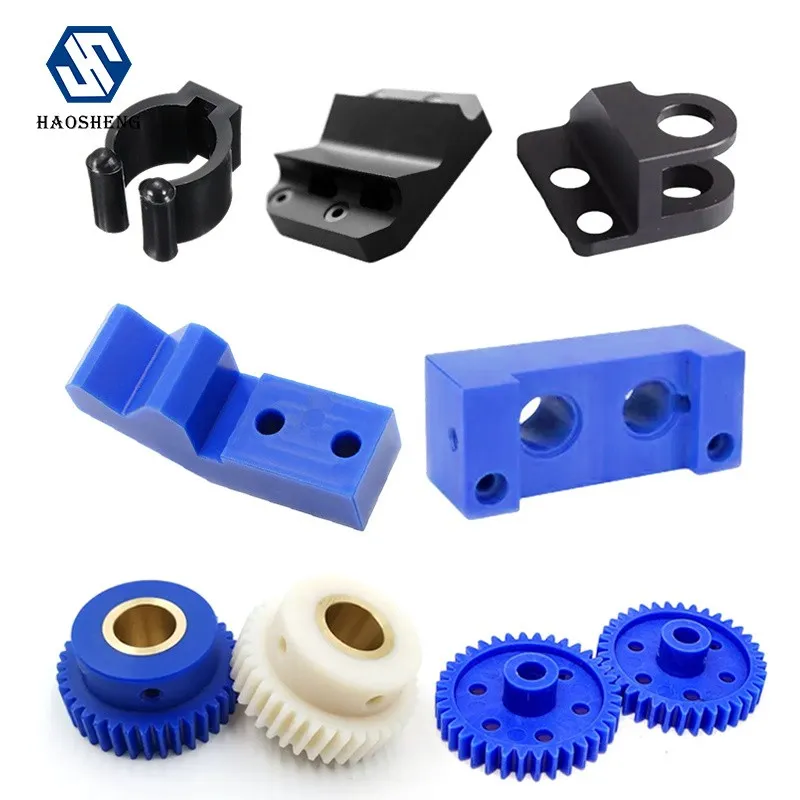
Despite the challenges posed by water absorption, Nylon PA66 is still widely used in many applications. For example, in the automotive industry, it's used for making Nylon Parts such as gears, bearings, and engine components. In these applications, engineers need to carefully consider the potential for water absorption and design the parts accordingly.
In the plumbing industry, PA6 Nylon Tube is often used. While it has good chemical resistance and mechanical properties, water absorption can still be a factor, especially in applications where the tubes are exposed to high humidity or in contact with water for long periods.
If you're in the market for Nylon PA66, it's important to have a clear understanding of your application requirements. Think about the operating environment, the required mechanical and electrical properties, and how water absorption might affect the performance of the material.
Conclusion
In conclusion, water absorption is a significant factor that can greatly affect the properties of Nylon PA66. It can impact mechanical, electrical, and chemical properties, and it's something that needs to be carefully considered in any application. But with the right strategies, such as using additives, controlling the environment, and proper design, we can mitigate the negative effects of water absorption.
If you're interested in learning more about Nylon PA66 or if you're looking to source high - quality Nylon PA66 for your projects, don't hesitate to reach out. We're here to help you find the best solution for your specific needs. Whether you need advice on material selection or want to discuss a large - scale procurement, we're just a message away. Let's start a conversation and see how we can work together to make your projects a success.
References
- "Polymer Science and Technology" by Carl A. Harriss
- "Engineering Plastics: Properties and Applications" by Donald V. Rosato