

Do PP products have a smooth surface?
As a supplier of PP products, I often encounter inquiries from clients regarding the surface characteristics of our polypropylene (PP) offerings. One of the most common questions is whether PP products have a smooth surface. In this blog post, I'll delve into the factors that determine the smoothness of PP products, the benefits of a smooth surface, and how our company ensures high - quality, smooth - surfaced PP items.
What Determines the Smoothness of PP Products?
The smoothness of PP products is influenced by several key factors, starting from the raw materials and extending through the manufacturing process.
Raw Materials
The quality and type of polypropylene resin used play a fundamental role. High - grade PP resins typically contain fewer impurities and have a more uniform molecular structure. This uniformity allows for a more consistent flow during the molding process, which is essential for achieving a smooth surface. For instance, some of the advanced PP resins we source are engineered to have excellent melt - flow properties. These resins can easily fill the mold cavities, minimizing the formation of surface irregularities such as bumps or pits.
Manufacturing Process
The method of manufacturing PP products significantly impacts their surface finish. Injection molding, for example, is a widely used technique in our production line. In injection molding, molten PP is injected into a mold cavity under high pressure. The precision of the mold design and the control of the injection parameters are crucial. A well - designed mold with smooth internal surfaces will transfer its smoothness to the final product. Moreover, accurate control of temperature, pressure, and injection speed ensures that the PP fills the mold evenly and solidifies uniformly, resulting in a smooth surface.

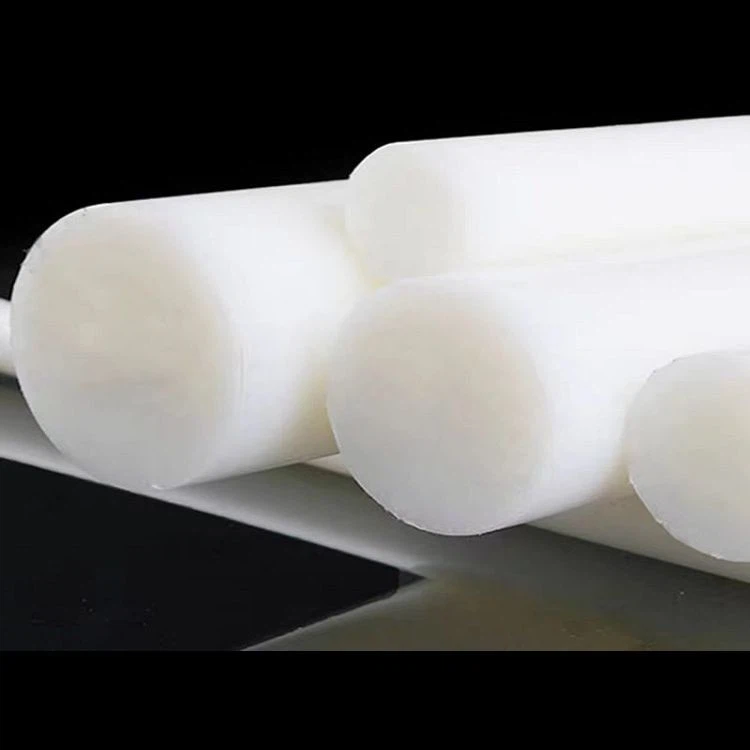
Extrusion is another common process for making PP products like PP Plastic Board and PP Plastic Rod. During extrusion, the PP resin is melted and forced through a die to form a continuous shape. The quality of the die and the speed of extrusion can affect the surface smoothness. A properly maintained and precisely machined die will produce a product with a smooth exterior.
Post - Processing
After the initial manufacturing, post - processing steps can further enhance the smoothness of PP products. Polishing is a common post - processing technique. By using various polishing methods such as mechanical polishing or chemical polishing, we can remove any minor surface imperfections and achieve an even smoother finish. Additionally, coating the PP products with a thin layer of a smooth - finish material can also improve the surface feel and appearance.
Benefits of a Smooth Surface in PP Products
A smooth surface on PP products offers numerous advantages, both from a functional and aesthetic perspective.
Functional Benefits
- Ease of Cleaning: Smooth - surfaced PP products are much easier to clean compared to those with rough surfaces. Dirt, dust, and other contaminants have fewer places to adhere to, allowing for quick and efficient cleaning. This is particularly important in applications such as food processing equipment or medical devices, where hygiene is of utmost importance.
- Reduced Friction: A smooth surface reduces friction, which is beneficial in applications where the PP product comes into contact with other materials. For example, in conveyor systems, smooth - surfaced PP parts can reduce wear and tear on both the PP component and the materials being transported. This not only extends the lifespan of the products but also improves the overall efficiency of the system.
- Chemical Resistance: A smooth surface can enhance the chemical resistance of PP products. Since there are fewer surface irregularities, chemicals are less likely to penetrate the material. This makes smooth - surfaced PP products suitable for use in harsh chemical environments.
Aesthetic Benefits
- Enhanced Appearance: Smooth - surfaced PP products have a more professional and high - quality look. Whether it's a consumer product like a storage container or an industrial part, a smooth finish gives the impression of durability and precision. This can be a significant selling point, especially in markets where appearance matters.
- Customization: A smooth surface provides an ideal base for printing, painting, or applying labels. This allows for greater customization options, enabling our clients to brand their products or add important information in a clear and visually appealing way.
How Our Company Ensures Smooth - Surfaced PP Products
As a supplier, we are committed to delivering PP products with the highest level of surface smoothness.
Quality Control at Every Step
We have a rigorous quality control system in place that starts from the selection of raw materials. We work closely with our resin suppliers to ensure that only the highest - quality PP resins are used in our production. During the manufacturing process, our experienced technicians monitor every parameter, from the temperature of the molding machine to the speed of extrusion. Regular inspections are carried out to detect any potential surface defects early on.
State - of - the - Art Equipment
We invest in the latest manufacturing and post - processing equipment. Our injection molding machines are equipped with advanced control systems that allow for precise control of all molding parameters. Our extrusion lines are designed to produce products with consistent cross - sections and smooth surfaces. In addition, our polishing and coating equipment are capable of achieving a high - gloss, smooth finish on a variety of PP products.
Skilled Workforce
Our workforce is composed of highly skilled and experienced professionals. Our engineers and technicians have in - depth knowledge of PP materials and manufacturing processes. They are constantly trained to keep up with the latest industry trends and technologies, ensuring that we can produce PP products with the best possible surface quality.
Applications of Smooth - Surfaced PP Products
Smooth - surfaced PP products have a wide range of applications across various industries.
Consumer Goods
In the consumer goods industry, smooth - surfaced PP products are commonly used in the production of household items such as kitchenware, storage containers, and toys. The smooth surface not only makes these products easy to clean but also gives them an attractive appearance, making them more appealing to consumers.
Industrial Applications
In the industrial sector, PP Parts with smooth surfaces are used in machinery, automotive components, and electrical enclosures. The reduced friction and chemical resistance of these parts contribute to the efficient operation and long - term durability of the equipment.
Medical and Food Industries
In the medical and food industries, smooth - surfaced PP products are essential due to their hygiene and chemical resistance properties. They are used in the production of medical devices, food containers, and packaging materials, ensuring the safety and quality of the products.
Conclusion
In conclusion, PP products can indeed have a smooth surface, and the smoothness is determined by a combination of raw materials, manufacturing processes, and post - processing techniques. The benefits of a smooth surface are numerous, both functionally and aesthetically. As a supplier of PP products, we are dedicated to providing our clients with high - quality, smooth - surfaced PP items that meet their specific needs.
If you are interested in our PP products and would like to discuss your requirements, please feel free to reach out to us for a procurement consultation. We look forward to working with you to find the perfect PP solutions for your business.
References
- “Polypropylene: Properties, Processing, and Applications” by X. Lu and K. P. McCarthy
- “Plastics Engineering Handbook of the Society of Plastics Engineers” edited by Myer Kutz