

As a seasoned supplier of Nylon Plates, I've often been asked a fascinating question: Can the coefficient of friction of a nylon plate be adjusted? In this blog post, I'll delve into this topic, exploring the science behind friction, the factors that influence the coefficient of friction in nylon plates, and the methods that can be employed to adjust it.
Understanding the Coefficient of Friction
Before we discuss whether the coefficient of friction of a nylon plate can be adjusted, it's essential to understand what the coefficient of friction is. The coefficient of friction is a dimensionless quantity that represents the ratio of the force of friction between two surfaces to the normal force pressing the surfaces together. It is denoted by the Greek letter μ (mu) and can be either static (μs) or kinetic (μk). The static coefficient of friction applies when the two surfaces are at rest relative to each other, while the kinetic coefficient of friction applies when the surfaces are in motion.
The coefficient of friction depends on several factors, including the nature of the materials in contact, the roughness of the surfaces, the presence of lubricants, and the temperature. For nylon plates, the coefficient of friction is an important property that can affect their performance in various applications. For example, in applications where low friction is desired, such as in conveyor systems or sliding components, a lower coefficient of friction is preferred. On the other hand, in applications where high friction is required, such as in braking systems or gripping devices, a higher coefficient of friction is necessary.
Factors Affecting the Coefficient of Friction in Nylon Plates
Several factors can influence the coefficient of friction of nylon plates. Understanding these factors is crucial for determining whether and how the coefficient of friction can be adjusted.
Material Composition
The composition of the nylon material used in the plate can have a significant impact on its coefficient of friction. Different types of nylon, such as Nylon 6 and Nylon 66, have different molecular structures and properties, which can affect their frictional behavior. For example, Nylon 6 has a lower melting point and a slightly higher coefficient of friction compared to Nylon 66. Additionally, the addition of fillers or additives to the nylon material can also modify its frictional properties. For instance, the addition of glass fibers can increase the hardness and wear resistance of the nylon plate, which may result in a higher coefficient of friction.
Surface Roughness
The roughness of the surface of the nylon plate is another important factor that affects its coefficient of friction. A rougher surface generally has a higher coefficient of friction compared to a smoother surface. This is because the asperities (small bumps and valleys) on the rough surface can interlock with the asperities on the mating surface, increasing the frictional force. However, if the surface is too rough, it can also cause excessive wear and damage to the mating surface. Therefore, it is important to control the surface roughness of the nylon plate to achieve the desired coefficient of friction.
Lubrication
The presence of a lubricant between the nylon plate and the mating surface can significantly reduce the coefficient of friction. Lubricants can form a thin film between the two surfaces, separating them and reducing the direct contact and friction. Common lubricants used with nylon plates include oils, greases, and solid lubricants such as graphite or molybdenum disulfide. The choice of lubricant depends on the specific application requirements, such as the operating temperature, load, and speed.
Temperature
Temperature can also have a significant effect on the coefficient of friction of nylon plates. As the temperature increases, the nylon material becomes softer and more compliant, which can reduce the coefficient of friction. However, at very high temperatures, the nylon material may start to degrade, which can increase the coefficient of friction and cause other problems such as wear and deformation. Therefore, it is important to consider the operating temperature range when selecting a nylon plate and adjusting its coefficient of friction.
Methods for Adjusting the Coefficient of Friction in Nylon Plates
Based on the factors discussed above, there are several methods that can be used to adjust the coefficient of friction of nylon plates.
Material Selection
One of the simplest ways to adjust the coefficient of friction is to select the appropriate nylon material. As mentioned earlier, different types of nylon have different frictional properties. By choosing the right type of nylon for the specific application, it is possible to achieve the desired coefficient of friction. For example, if a low coefficient of friction is required, Nylon 66 may be a better choice than Nylon 6. Additionally, the addition of fillers or additives to the nylon material can also be used to modify its frictional properties. For instance, the addition of PTFE (polytetrafluoroethylene) can significantly reduce the coefficient of friction of the nylon plate.
Surface Treatment
Surface treatment is another effective method for adjusting the coefficient of friction of nylon plates. There are several surface treatment techniques that can be used, including machining, polishing, and coating. Machining can be used to control the surface roughness of the nylon plate, while polishing can be used to make the surface smoother and reduce the coefficient of friction. Coating the nylon plate with a low-friction material, such as PTFE or a ceramic coating, can also significantly reduce the coefficient of friction.
Lubrication
As mentioned earlier, lubrication is an effective way to reduce the coefficient of friction of nylon plates. By applying a lubricant between the nylon plate and the mating surface, it is possible to achieve a lower coefficient of friction and improve the performance of the system. The choice of lubricant depends on the specific application requirements, such as the operating temperature, load, and speed. It is important to select a lubricant that is compatible with the nylon material and the mating surface to avoid any adverse effects.
Design Modification
In some cases, design modification can also be used to adjust the coefficient of friction of nylon plates. For example, by changing the shape or geometry of the nylon plate, it is possible to reduce the contact area between the two surfaces, which can reduce the frictional force. Additionally, by using a different type of mating surface or by adding a cushioning material between the two surfaces, it is possible to modify the frictional behavior of the system.
Applications of Nylon Plates with Adjusted Coefficient of Friction
Nylon plates with adjusted coefficient of friction have a wide range of applications in various industries. Some of the common applications include:

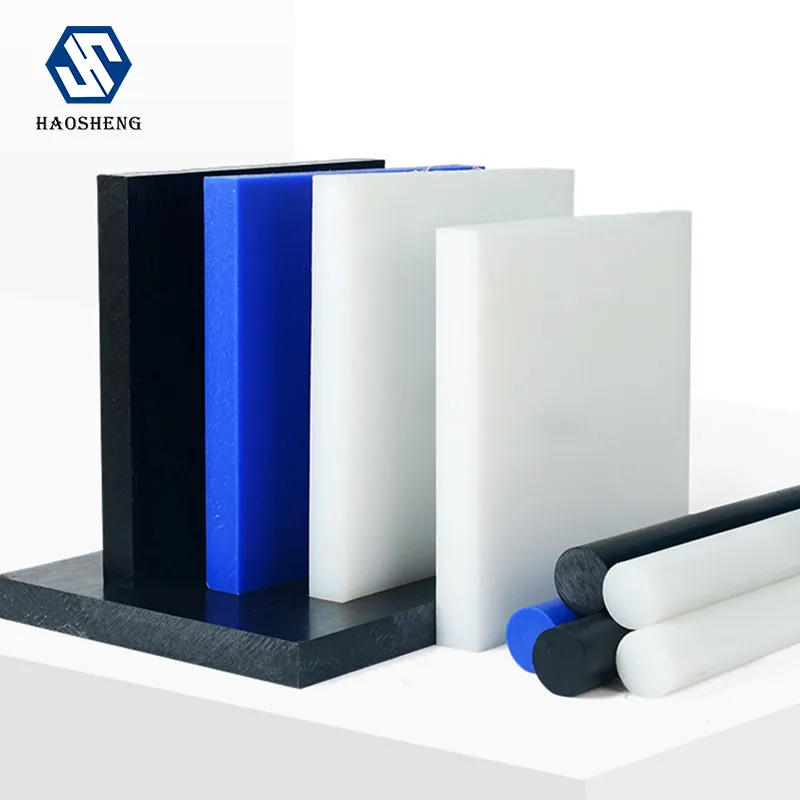
Conveyor Systems
In conveyor systems, nylon plates with a low coefficient of friction are often used to reduce the energy consumption and wear of the system. By using a lubricated or coated nylon plate, it is possible to achieve a smooth and efficient operation of the conveyor belt.
Sliding Components
In sliding components, such as bearings and guides, nylon plates with a low coefficient of friction are preferred to reduce the friction and wear of the components. By using a nylon plate with a suitable surface treatment or lubrication, it is possible to improve the performance and lifespan of the sliding components.
Braking Systems
In braking systems, nylon plates with a high coefficient of friction are required to provide reliable braking performance. By using a nylon plate with a rougher surface or a suitable filler or additive, it is possible to increase the coefficient of friction and improve the braking efficiency.
Gripping Devices
In gripping devices, such as clamps and jaws, nylon plates with a high coefficient of friction are used to provide a secure grip on the workpiece. By using a nylon plate with a suitable surface treatment or coating, it is possible to increase the coefficient of friction and improve the gripping force.
Conclusion
In conclusion, the coefficient of friction of a nylon plate can be adjusted through various methods, including material selection, surface treatment, lubrication, and design modification. By understanding the factors that affect the coefficient of friction and choosing the appropriate method for adjustment, it is possible to achieve the desired frictional properties for specific applications. As a supplier of Nylon Plates, we offer a wide range of nylon plates with different coefficients of friction to meet the diverse needs of our customers. If you are interested in our products or have any questions about adjusting the coefficient of friction of nylon plates, please feel free to contact us for more information and to discuss your specific requirements. We look forward to the opportunity to work with you and provide you with high-quality nylon plates that meet your needs.
References
- "Engineering Plastics Handbook" by Carl A. Harper
- "Friction and Wear of Polymers" by S. K. Sinha and B. K. Gupta
- "Nylon: Properties, Processing, and Applications" by R. B. Seymour and C. E. Carraher Jr.