

Yo, what's up everyone! I'm a supplier of PP Plastic Rods, and today I wanna have a chat with you about whether PP plastic rods can be used in cryogenic environments.
First off, let's get to know what PP plastic rods are. PP stands for polypropylene. It's a thermoplastic polymer that's widely used in all sorts of industries. PP plastic rods are known for their good chemical resistance, relatively low cost, and decent mechanical properties. You can find them in applications like manufacturing machine parts, DIY projects, and even in some medical equipment.
Now, when we talk about cryogenic environments, we're referring to extremely cold conditions, usually below -150°C. These kinds of environments are found in things like liquid nitrogen storage, some space applications, and certain scientific research facilities.
So, can PP plastic rods handle these super - cold temperatures? Well, it's a bit of a mixed bag.
The Good Stuff about PP in Cold
PP plastic has some inherent properties that give it a fighting chance in cold environments. For starters, it has a relatively low coefficient of thermal expansion. This means that when the temperature drops, it doesn't shrink as much as some other materials. In a cryogenic setup, where components need to maintain their shape and fit within a specific system, this is a big plus.

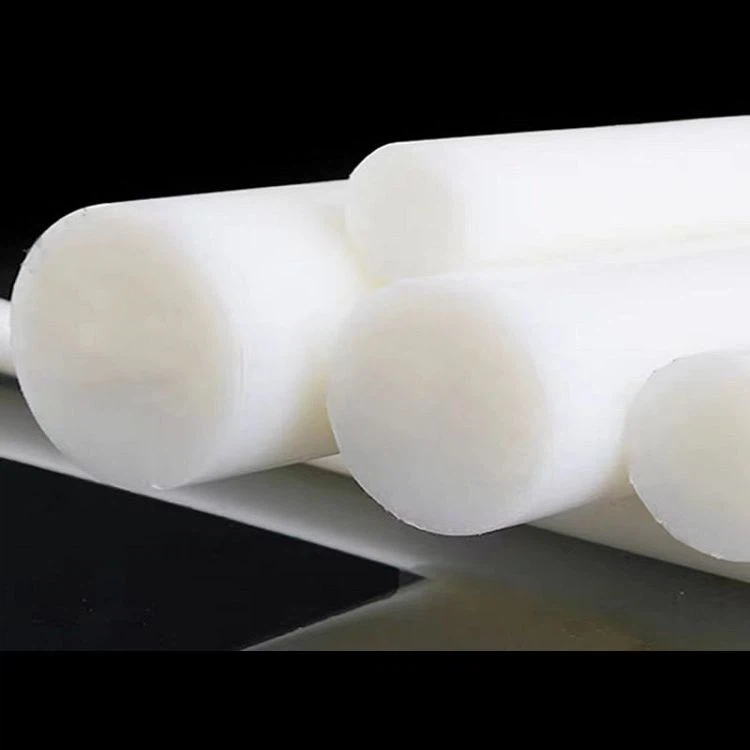
Also, PP has good chemical stability. Even in the presence of extremely cold substances, it won't react chemically in most cases. This makes it suitable for storing or transporting cryogenic liquids in some non - critical applications. For example, if you're using a PP Plastic Rod as a simple support structure in a cryogenic storage unit that's not in direct contact with the liquid, it can hold up quite well.
The Challenges
However, there are some significant challenges when it comes to using PP plastic rods in cryogenic environments. One of the main issues is its impact resistance. At normal temperatures, PP has decent impact strength, but as the temperature drops, it becomes more brittle. This means that it's more likely to crack or break when subjected to even a small amount of impact.
In a cryogenic environment, there can be sudden temperature changes, and these thermal shocks can cause internal stresses in the PP plastic rod. Over time, these stresses can lead to micro - cracks, which can then grow and eventually cause the rod to fail.
Another problem is its low glass transition temperature. The glass transition temperature is the point at which a material changes from a hard, glassy state to a more rubbery state. For PP, this temperature is relatively high compared to what you'd expect in a cryogenic environment. Once the temperature drops below this point, the material loses its flexibility and becomes stiffer, which can again contribute to cracking.
Applications Where It Might Work
Despite the challenges, there are still some applications where PP plastic rods can be used in cryogenic environments. One such application is in non - load - bearing structures. For example, if you need a simple spacer or a guide in a cryogenic chamber, a PP Plastic Rod can do the job. Since it's not carrying any significant weight or forces, the reduced impact resistance and increased brittleness might not be a deal - breaker.
In some cases, PP can also be used in combination with other materials. You could use a PP plastic rod as an inner core and surround it with a more impact - resistant outer layer. This way, the outer layer can absorb the impact forces, while the PP rod provides the basic structure.
Alternatives and Considerations
If you're looking for something more suitable for cryogenic environments, there are other materials to consider. For example, some types of engineering plastics like PEEK (polyether ether ketone) have much better performance in cold conditions. They have higher impact resistance and better dimensional stability at low temperatures.
However, these alternative materials are often more expensive than PP. So, it really comes down to your specific application, budget, and performance requirements. If you're on a tight budget and your application is not too demanding, PP plastic rods might still be a viable option.
It's also important to note that if you do decide to use PP plastic rods in a cryogenic environment, you need to do some proper testing first. You should expose the rods to the expected temperature range and any potential impact forces to see how they perform. This can help you identify any potential issues before you start using them in a real - world application.
How We Can Help
As a supplier of PP Plastic Rod, I understand the importance of finding the right material for your needs. We offer a wide range of PP plastic rods in different sizes and specifications. If you're considering using them in a cryogenic environment, we can work with you to understand your requirements and provide you with samples for testing.
We also have a team of experts who can offer advice on how to best use our products in these challenging conditions. Whether it's about proper installation, handling, or any modifications that might improve the performance of the rods in the cold, we're here to help.
In addition to PP Plastic Rods, we also supply PP Plastic Board and PP Centrifuge Tubes. These products also have their own unique properties and applications, and we can assist you in finding the right one for your specific project.
If you're interested in learning more about our products or have any questions about using PP plastic rods in cryogenic environments, don't hesitate to reach out. We're always happy to have a chat and see how we can meet your needs. Whether you're a small - scale DIY enthusiast or a large - scale industrial user, we're committed to providing you with high - quality products and excellent service.
References
- "Plastics in Cryogenic Applications" - A technical report on the performance of various plastics at low temperatures.
- "Properties of Polypropylene" - A comprehensive study on the physical and chemical properties of polypropylene.