

Can PP Parts be used in high - pressure environments?
As a supplier of PP (Polypropylene) parts, I often receive inquiries from customers about the suitability of our products in high - pressure environments. This is a crucial question, as the performance of PP parts under high pressure can significantly impact the safety and efficiency of various industrial applications. In this blog, I will delve into the properties of PP, analyze its behavior under high pressure, and discuss the scenarios where it can or cannot be used.
Properties of Polypropylene
Polypropylene is a thermoplastic polymer that is widely used in numerous industries due to its excellent combination of properties. It has a relatively low density, which makes it lightweight and cost - effective for many applications. PP also offers good chemical resistance, meaning it can withstand exposure to a wide range of chemicals without significant degradation. Additionally, it has high impact strength and good fatigue resistance, which allows it to endure repeated stress and impacts over time.
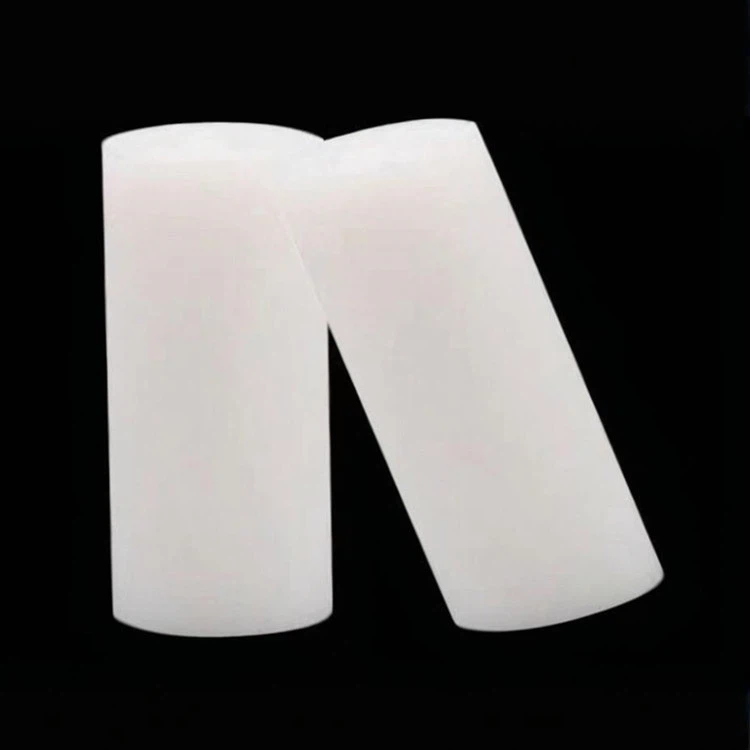

However, when it comes to high - pressure environments, we need to look at some of its other physical and mechanical properties more closely. The melting point of PP typically ranges from 160 - 166°C, and its modulus of elasticity is relatively low compared to some other engineering plastics. These factors play a significant role in determining its performance under high pressure.
Behavior of PP Parts under High Pressure
Under high pressure, the behavior of PP parts is influenced by several factors. One of the primary concerns is the potential for deformation. PP has a certain degree of flexibility, and when subjected to high pressure, it may undergo elastic or plastic deformation. Elastic deformation is reversible, meaning the part will return to its original shape once the pressure is removed. Plastic deformation, on the other hand, is permanent and can lead to a change in the part's dimensions and functionality.
The pressure at which plastic deformation occurs depends on the specific grade of PP, the design of the part, and the temperature. At elevated temperatures, the yield strength of PP decreases, making it more susceptible to plastic deformation under high pressure. For example, in a high - pressure hydraulic system, if the temperature of the fluid is high, the PP parts may experience more significant deformation than at room temperature.
Another aspect to consider is the possibility of stress cracking. High pressure can induce internal stresses in PP parts, and if these stresses exceed the material's resistance, stress cracking may occur. Stress cracking can compromise the integrity of the part and lead to failure. Environmental factors such as the presence of certain chemicals can also accelerate stress cracking in PP under high pressure.
Scenarios where PP Parts can be Used in High - Pressure Environments
Despite the challenges, there are several scenarios where PP parts can be effectively used in high - pressure environments.
Low - to - Moderate Pressure Applications: In applications where the pressure is relatively low to moderate, PP parts can perform well. For example, in some low - pressure water systems, PP pipes and fittings can be used. The chemical resistance of PP makes it suitable for transporting water and other non - corrosive fluids, and its lightweight nature simplifies installation. Our PP Plastic Rod can be used in such systems for structural support or as a component in valves and connectors.
Short - Term High - Pressure Situations: In some cases, PP parts can withstand short - term high - pressure spikes. For instance, in a centrifuge, the PP Centrifuge Tubes are subjected to high centrifugal forces, which create high pressure inside the tubes. However, these forces are usually applied for a short period. PP's good impact strength and fatigue resistance allow the centrifuge tubes to endure these short - term high - pressure conditions without failure.
Applications with Controlled Temperature: If the temperature in a high - pressure environment can be carefully controlled, PP parts can be used more reliably. For example, in some industrial processes where the high - pressure equipment is cooled to maintain a stable temperature, the performance of PP parts can be optimized. Our PP Plastic Board can be used in such applications as a lining or a structural component, provided that the temperature is within the acceptable range for PP.
Scenarios where PP Parts are not Suitable for High - Pressure Environments
There are also situations where PP parts are not recommended for high - pressure use.
Continuous High - Pressure and High - Temperature Conditions: In applications where the pressure is continuously high and the temperature is also elevated, PP parts are likely to experience significant deformation and stress cracking. For example, in a high - pressure steam system operating at high temperatures, the combination of high pressure and heat can quickly degrade the PP parts, leading to premature failure.
Applications with High - Pressure Fluctuations: If the pressure in an environment fluctuates rapidly and over a wide range, PP parts may not be able to handle the stress cycling. The repeated changes in pressure can cause fatigue failure in the PP material, especially if the pressure fluctuations are combined with other factors such as high temperature or chemical exposure.
Conclusion
In conclusion, whether PP parts can be used in high - pressure environments depends on a variety of factors, including the pressure level, temperature, duration of exposure, and the presence of other environmental factors. While PP has some limitations in high - pressure applications, it can be a viable option in certain scenarios, especially those with low - to - moderate pressure, short - term high - pressure spikes, or controlled temperature conditions.
As a supplier of PP parts, we are committed to providing our customers with the best - suited products for their specific applications. Our team of experts can help you evaluate whether our PP parts are suitable for your high - pressure environment. If you have any questions or are interested in purchasing our PP products, we encourage you to contact us for a detailed discussion and a personalized solution. We look forward to working with you to meet your industrial needs.
References
- "Polypropylene: Structure, Blends and Composites" by S. Fakirov
- "Handbook of Plastics, Elastomers and Composites" by Charles A. Harper