

As a supplier of PP Plastic Rods, I often encounter questions from customers regarding the chemical resistance of our products, especially their resistance to solvents. In this blog, I will delve into the topic of whether PP plastic rods are resistant to solvents, exploring the science behind it, real - world applications, and limitations.
Understanding Polypropylene (PP)
Polypropylene is a thermoplastic polymer that is widely used in various industries due to its excellent combination of properties. It is known for its high melting point, good mechanical strength, and relatively low density. Chemically, PP has a non - polar molecular structure, which is composed of long chains of propylene monomers. This non - polar nature plays a crucial role in its interaction with solvents.
Solvent Resistance Mechanism of PP Plastic Rods
The solvent resistance of PP plastic rods is mainly determined by the solubility parameter theory. Solvents can be classified as polar and non - polar. Polar solvents have a high dipole moment, while non - polar solvents have a low or zero dipole moment.
PP plastic rods, being non - polar, have a better resistance to polar solvents. The non - polar nature of PP means that there is little to no attraction between the PP molecules and the polar solvent molecules. As a result, polar solvents such as water, alcohols (e.g., ethanol, methanol), and acetone generally do not dissolve or significantly swell PP plastic rods.
For example, if you immerse a PP plastic rod in water, you will find that it remains intact. Water molecules are highly polar, and they cannot penetrate the non - polar PP matrix. Similarly, ethanol, which is also a polar solvent, has limited interaction with PP. This makes PP plastic rods suitable for applications where contact with polar solvents is expected, such as in the manufacturing of PP Parts that may come into contact with aqueous solutions or mild alcohols in industrial cleaning processes.
On the other hand, non - polar solvents pose a greater challenge to the solvent resistance of PP plastic rods. Non - polar solvents like hydrocarbons (e.g., hexane, toluene) have similar solubility parameters to PP. According to the principle of "like dissolves like," non - polar solvents can interact with the non - polar PP molecules. Over time, non - polar solvents may cause swelling or even partial dissolution of PP plastic rods.
When a PP plastic rod is exposed to toluene, for instance, the toluene molecules can penetrate the PP matrix and disrupt the intermolecular forces between the PP chains. This can lead to a decrease in the mechanical properties of the rod, such as a reduction in its tensile strength and hardness.
Real - World Applications and Solvent Resistance
PP plastic rods are used in a wide range of industries, and their solvent resistance is a critical factor in many applications.
In the laboratory setting, PP Centrifuge Tubes are commonly made from PP. These tubes are often used to hold various chemical solutions. Since many of the solutions used in laboratories are aqueous or contain polar solvents, the solvent resistance of PP ensures that the tubes remain intact during the centrifugation process and do not contaminate the samples.

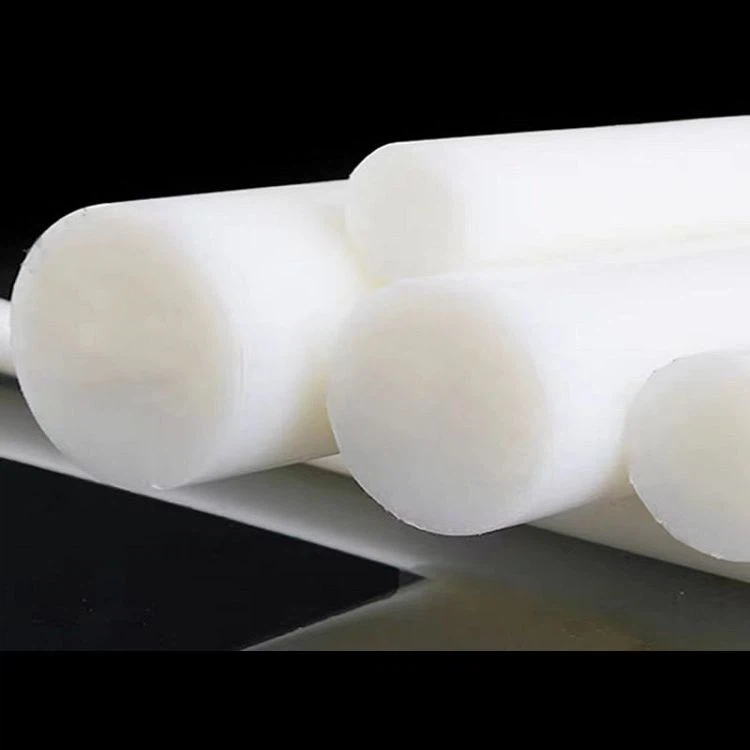
In the chemical processing industry, PP plastic rods are used to manufacture components such as valves, pipes, and fittings. These components may come into contact with different solvents during the chemical production process. By choosing PP plastic rods, manufacturers can ensure that the components can withstand exposure to polar solvents without significant degradation.
However, in industries where non - polar solvents are prevalent, such as the paint and coating industry, special considerations need to be taken. If a PP plastic rod is used in an environment where it will be exposed to non - polar solvents, additional protective measures may be required, such as coating the rod with a more solvent - resistant material.
Factors Affecting Solvent Resistance
Apart from the polarity of the solvent, several other factors can affect the solvent resistance of PP plastic rods.
Temperature is an important factor. As the temperature increases, the solubility of solvents in PP generally increases. At higher temperatures, the molecular motion of both the solvent and the PP molecules becomes more vigorous, which facilitates the penetration of the solvent into the PP matrix. For example, a PP plastic rod that can withstand a certain non - polar solvent at room temperature may start to swell or dissolve when the temperature is raised.
The duration of exposure also matters. Even a solvent that has a relatively low affinity for PP can cause damage if the exposure time is long enough. Continuous exposure to a non - polar solvent over weeks or months can gradually degrade the PP plastic rod, leading to a loss of its mechanical and physical properties.
The degree of crystallinity of the PP also affects its solvent resistance. Highly crystalline PP has a more ordered molecular structure, which makes it more resistant to solvent penetration compared to less crystalline PP. This is because the crystalline regions act as a barrier to the movement of solvent molecules.
Limitations of PP Plastic Rods in Solvent Resistance
While PP plastic rods have good resistance to many polar solvents, they are not completely immune to all chemical attacks. Some strong oxidizing agents, such as concentrated sulfuric acid or nitric acid, can react with PP and cause degradation. These acids can break the carbon - carbon bonds in the PP chains, leading to a loss of the polymer's integrity.
In addition, as mentioned earlier, the limited resistance to non - polar solvents is a significant limitation. In applications where long - term exposure to non - polar solvents is expected, alternative materials may need to be considered.
Conclusion and Call to Action
In conclusion, PP plastic rods have good resistance to polar solvents, which makes them suitable for a wide range of applications in industries where contact with aqueous or polar chemical solutions is common. However, their resistance to non - polar solvents is limited, and factors such as temperature, exposure duration, and crystallinity can affect their performance.
If you are in need of high - quality PP Plastic Rod for your specific application, and you have questions about their solvent resistance or other properties, feel free to contact us. We are more than happy to provide you with detailed information and assist you in choosing the most suitable product for your needs. Our team of experts can also offer advice on how to optimize the use of our PP plastic rods in different chemical environments.
References
- Brandrup, J., & Immergut, E. H. (1989). Polymer Handbook. Wiley - Interscience.
- Odian, G. (2004). Principles of Polymerization. Wiley.
- ASTM International. (2019). Standard Test Methods for Chemical Resistance of Plastics. ASTM D543.