

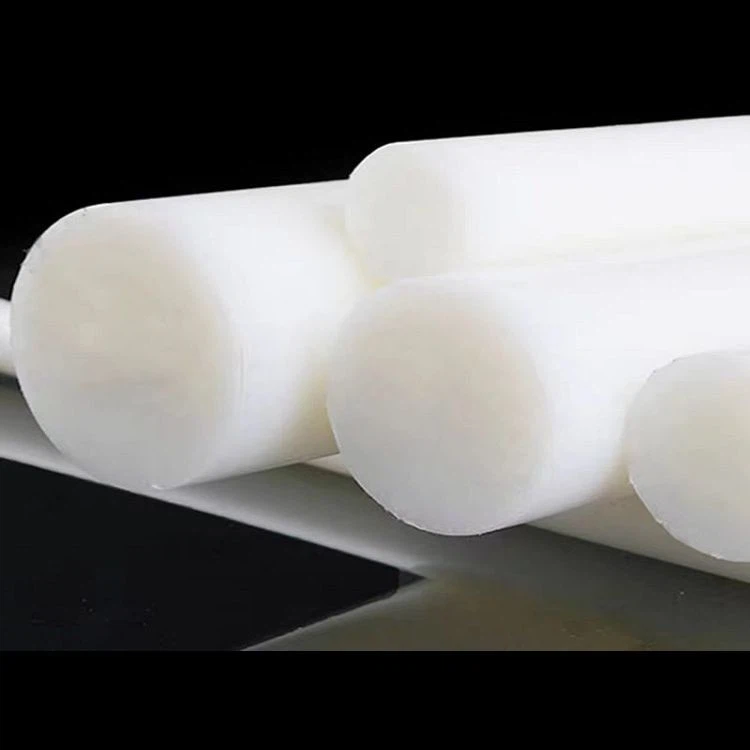
Hey there! I'm a supplier of PP Plastic Rod, and today I want to chat about one of the most common questions I get asked: Are PP plastic rods resistant to acids?
Let's start by getting to know what PP plastic is. Polypropylene (PP) is a thermoplastic polymer that's widely used in many industries. It's known for being tough, flexible, and having a relatively low cost. PP plastic rods are commonly used in various applications, like in manufacturing, construction, and the automotive industry, just to name a few.
Now, when it comes to acid resistance, PP plastic rods have some pretty impressive qualities. PP is a non - polar material, which means it doesn't react easily with many chemicals, including a lot of acids. This non - reactivity is due to the strong carbon - carbon and carbon - hydrogen bonds in its molecular structure. These bonds are stable and don't break down readily when exposed to acidic environments.
For weak acids, such as acetic acid (the main component in vinegar), PP plastic rods are highly resistant. You can leave a PP plastic rod in a diluted acetic acid solution for a long time without seeing any significant signs of damage. The rod will retain its shape, strength, and other physical properties.
Even with some moderately strong acids, like sulfurous acid, PP plastic can hold up well. Sulfurous acid is used in industries such as paper production and water treatment. When using PP plastic rods in systems where sulfurous acid is present, you can rely on them to maintain their integrity.
However, it's important to note that not all acids are the same, and PP plastic rods do have their limits. Strong oxidizing acids are a big no - no for PP. For example, concentrated sulfuric acid and nitric acid are extremely corrosive. These acids can react with the PP and break down its molecular structure over time. If you expose a PP plastic rod to concentrated sulfuric acid, you'll start to see changes like discoloration, surface degradation, and a loss of mechanical strength.
There are also factors that can affect the acid resistance of PP plastic rods. Temperature plays a crucial role. Higher temperatures generally increase the rate of chemical reactions. So, if you have a PP plastic rod in an acidic environment and the temperature goes up, the acid may be more likely to react with the rod.
The concentration of the acid is another factor. A highly concentrated acid is more likely to cause damage to the PP plastic rod than a diluted one. Even a weak acid can cause problems if it's highly concentrated or if the exposure time is long.
Now, speaking of other PP products. We also supply PP Plastic Board. Just like the PP plastic rods, the boards have similar acid - resistant properties. They are great for applications where you need a flat surface that can withstand certain acidic conditions, like in chemical storage areas or in some laboratory setups.
Our PP Centrifuge Tubes are also made from high - quality PP. These tubes are often used in scientific research and medical laboratories. They need to be resistant to various chemicals, including some weak to moderately strong acids that might be used in the processes. And they do a great job in most cases, as long as they aren't exposed to those strong oxidizing acids we talked about earlier.
PP Parts are used in all sorts of machinery and equipment. The acid resistance of these parts is important for their long - term performance. Whether it's a small component in a chemical processing plant or a part in an automotive engine compartment where there might be acidic contaminants, the right choice of PP parts can make a big difference.
In summary, PP plastic rods have good resistance to many acids, especially weak and moderately strong ones. But they aren't invincible, and you need to be careful when using them in the presence of strong oxidizing acids. Temperature and acid concentration are also important factors to consider.
If you're in the market for high - quality PP plastic rods or any of our other PP products, we're here to help. Our products are tested to ensure they meet the best quality standards. Whether you're a small - scale manufacturer or a large industrial company, we can provide the right solutions for your needs. Don't hesitate to reach out to us for more information or to start a conversation about your procurement. We're ready to work with you to make sure you get the products that fit your requirements.

References
- "Polypropylene: Properties and Applications" by Polymer Science Institution
- "Chemical Resistance of Thermoplastics" research report from a leading chemical engineering laboratory